
Why Military Sci-Fi
My choice of genre and why its important to me

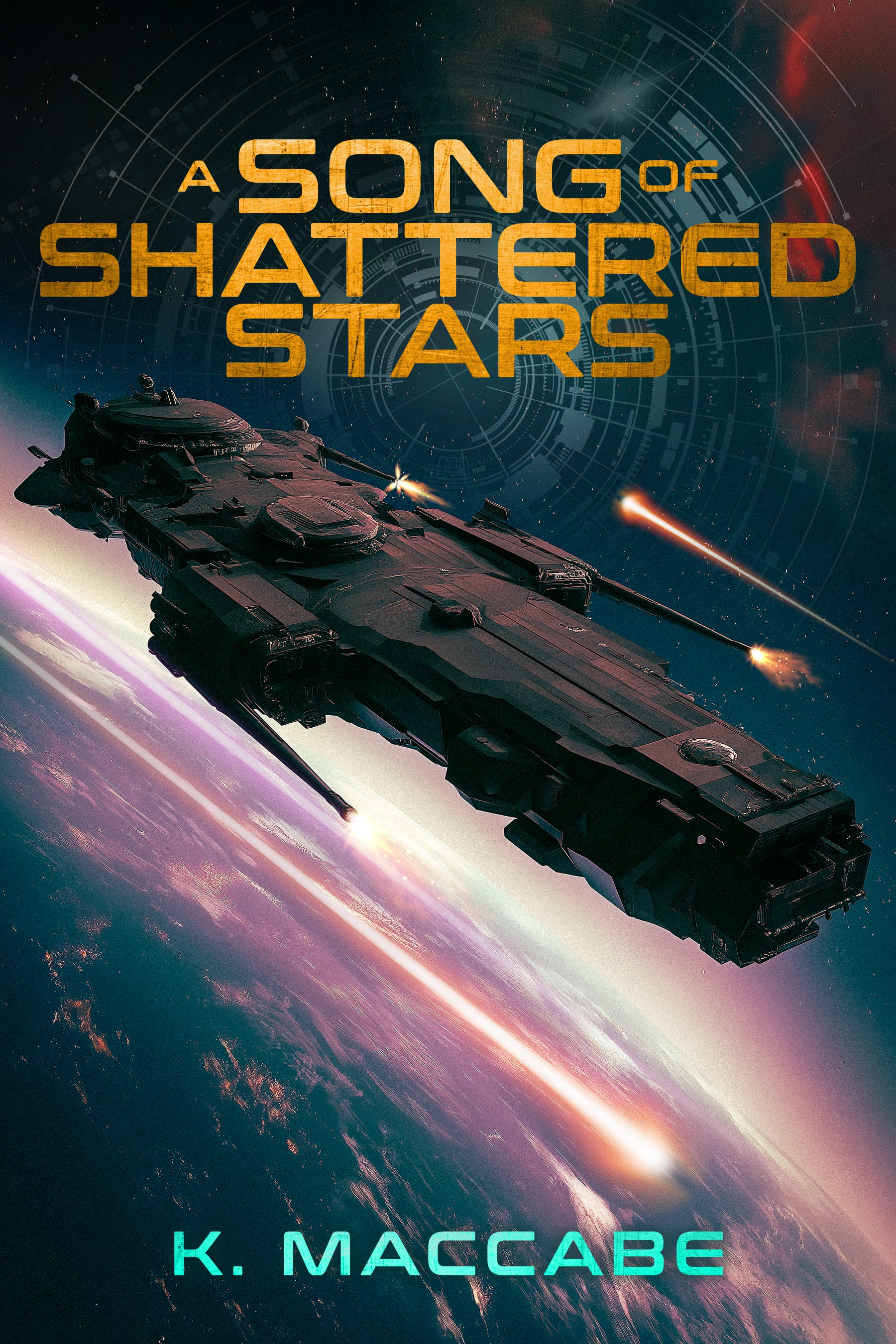
So now that A Song of Shattered Stars has released to unbelievable sales numbers—thank you all for your support, by the way—I want to talk about war. My understanding of it and why I view it the way I do. Unlike many sci-fi military fiction authors, I have no direct military experience. However, my wife is certain I was a soldier in another life. I can only hope that I had honor then, if that be so. What I do have is a love of military history. My specialty is covering the period from the Russo-Japanese War to the Vietnam War, and everything in between. The politics, the battles, the heroes who defied human limitations to save friends (Tango-Mike-Mike, looking at you)
If you don’t know Roy Benevitez, I highly recommend you look him up.
Here I want to talk about how I view war. What I see as a human context, why it’s so brutal in my science fiction, and the meaning behind the visceral dark image I paint of the future (if it is dark at all). Let’s start there, actually – am I the grim dark author, who paints his future full of war like some Gothic Sci-Fi Franchise I’m sure you know I’m referencing? Am I really that?
Am I 40K, but without the Space Cathedrals?
I have a scale. I call it the Tolkien-Martin scale.
My Scale of Fiction
On the Tolkien end, the fiction sees humanity as a flawed but beautiful creation. Where, no matter how dark or terrible the night, there is always light. A beacon that stands among the shadow and declares, ‘I will not abide evil, I shall do good, I shall not hate, I shall show mercy if it kills me.’ The image of Sam grabbing Frodo and carrying him up the mountain: sheer love defying all that evil can throw its way, and enduring.
On the other end is Martin; this fiction sees humanity as not just flawed, but without hope. Heroes are temporary, noble deeds are punished, good is only a matter of perspective, and nothing else. Here, we see sympathy as a base human emotion swept aside by greed. We see villains win, only to be killed by greater villains, or those seeking revenge from the depths of their hate.
And I’ll be honest, the older I get and the more I see of the world, the less I like Martin’s work. (Don’t shoot me). I think he is dead wrong in his interpretation of humanity. However, I see his general point.
I stand firmly on the Tolkien side of the scale.
For war is terrible, but love can blossom there, heroes stand firm, and Sophia Trotsky, Jeremiah Ryan, or Aaron Strand stand as beacons of courage against the terrible storm of war, carrying humanity into the ravages of such hate, and emerging human still. Terribly, bitterly, battered and broken, but their hearts beat true.
A Q&A
So why war, Kevin, why can’t you tell a space adventure on the frontier?
Because war is our greatest failure as a thinking species, it comes about when old men forget the cost of peace, and let it slip from their grasp, and then desperately spend the blood of their children to repurchase it. It is our ultimate trial as a species. Not climate change. Not religion. Not even murder, theft, hate, or socialism. War is our greatest failure.
But from the storming wrath of war steps the best of us.
Heroes who face the horror and rise above. Running through forests as bullets chase them through the foliage, to pull their comrades from a ditch. The chopper pilot comes in, despite the barrage of bullets from all directions. The young man who sketches a bird because he sees the beauty of nature in a small flutter of feathers and takes a bullet for it. The man who storms the beaches of Normandy, loses two fingers and his friends, yet becomes the engineer of a starship called the Enterprise, dedicated to the idea of hope and unity.
These are the reasons why war is my setting of choice.
War is not just any other circumstance.
It is hell, and once the soldier leaves the war, the war doesn’t always leave the soldier. That’s why it’s so brutal in my books. So much horror, it’s not merely an adventure for the main character. It’s Dante’s Inferno.
So how are you on the Tolkien side of this scale?
I think this one is obvious, but maybe that’s just because it’s in my head.
Here we are in my fiction: humanity, aliens, all living together among the stars. For all of our failings, our shadows, and our demons, here we are. Imperfect people that we are, soaring amongst the nebulae and dust clouds. We made it off our little blue marble. Because I believe in us still, for all of our failings and faults, I have not given in to the interpretation that we are doomed.
I do not see us as merely another species on the planet.
Show me a dolphin that’s put its kind on the moon, a hawk that’s broken the sound barrier, or a goat that’s written the equations that gave reason to gravity. You won’t be able to find one. We are special, maybe even divinely so, and that makes us astounding and beautiful.
And so yes, we fight our wars, bleed our children to buy back peace, and bow before our gods, goddesses, and divines, and ask why we struggle so much, why we can’t excise the evil from our species.
But despite all that, we accomplish beautiful things.
I see us in the stars one day.
Facing the same existential problems we do today.
The same problems we faced two millennia ago.
And getting dragged forward by the best of us – our heroes. Those men and women who show us what we can be, if only we do not content ourselves with what we are.
And as long as we have heroes, we have hope.
Thanks for reading this far. See you out there in the void.
K. MacCabe.
I really enjoyed this insight. Thank you for taking the time to share and congratulations on the book launch!